Centre of Excellence for Disability Inclusion - The Finished Vision
The Gordon Centre of Excellence for Disability Inclusion has been designed with accessibility, inclusion, and dignity at its core. Through the integration of Universal Design principles, extensive co-creation with people with lived experience, and the implementation of advisory feedback, the Centre goes beyond standard compliance to create a learning and social environment that is welcoming, safe, and empowering for all users.
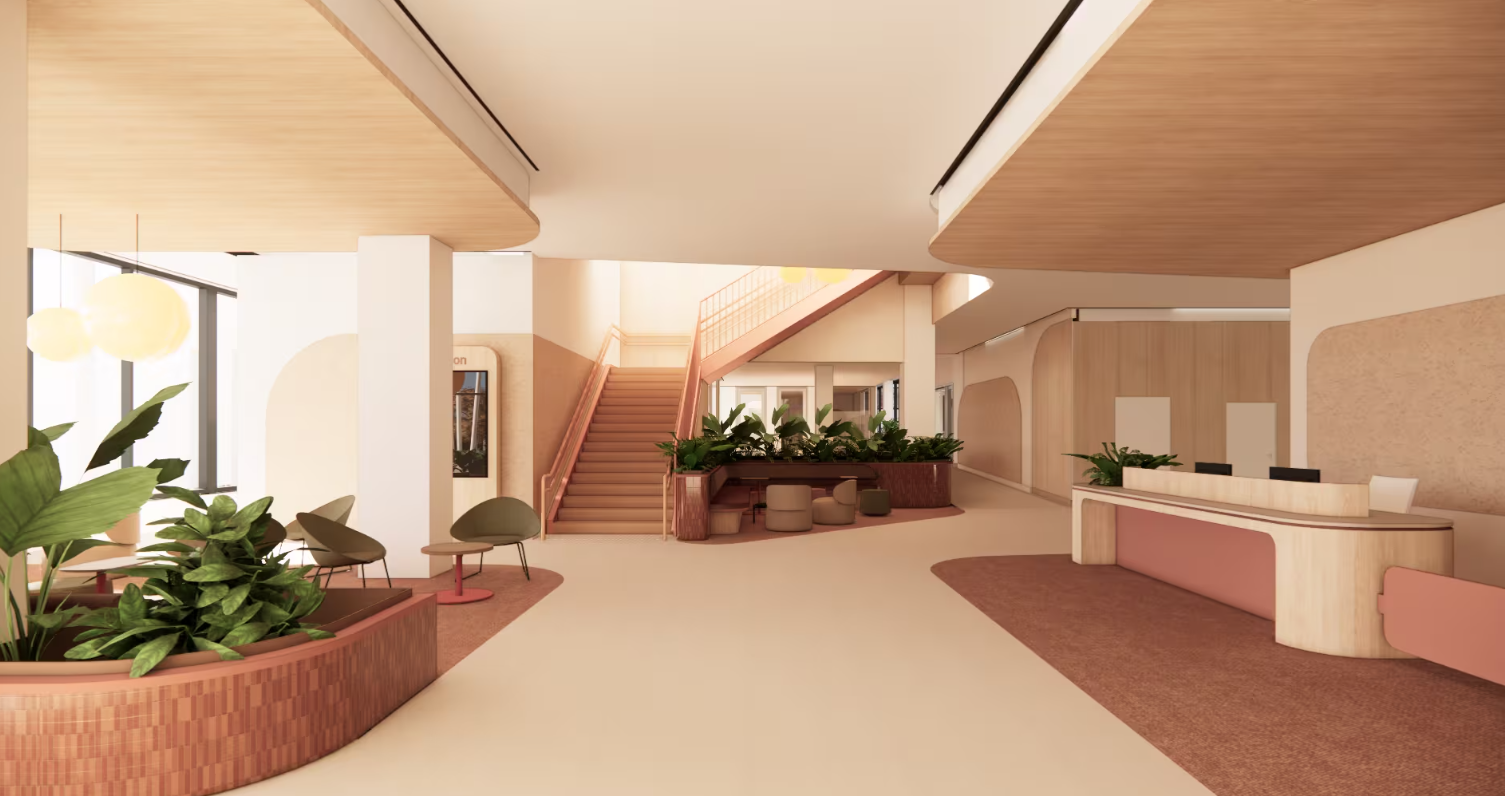 Centre of Excellence Entrance
Key Inclusion and Accessibility Features
Entrances and Circulation
- Intuitive pathway into the building from the street, and new drop-off parking.
- Step-free access and provision of automatic sliding entrance doors for ease of access.
- Step and ramp-free navigation through the campus, mitigating the existing split-level configuration.
- Doorways widened beyond minimum compliance requirements to improve mobility aid access.
- Clear circulation paths with continuous accessible travel routes.
- Visual, tactile, and auditory cues are provided at key navigation points.
- Maximising the size of the new lift car within the existing Building H lift core.
- Maximising the size of the new lift in Building G, providing an accessible connection between the ground level and upper levels
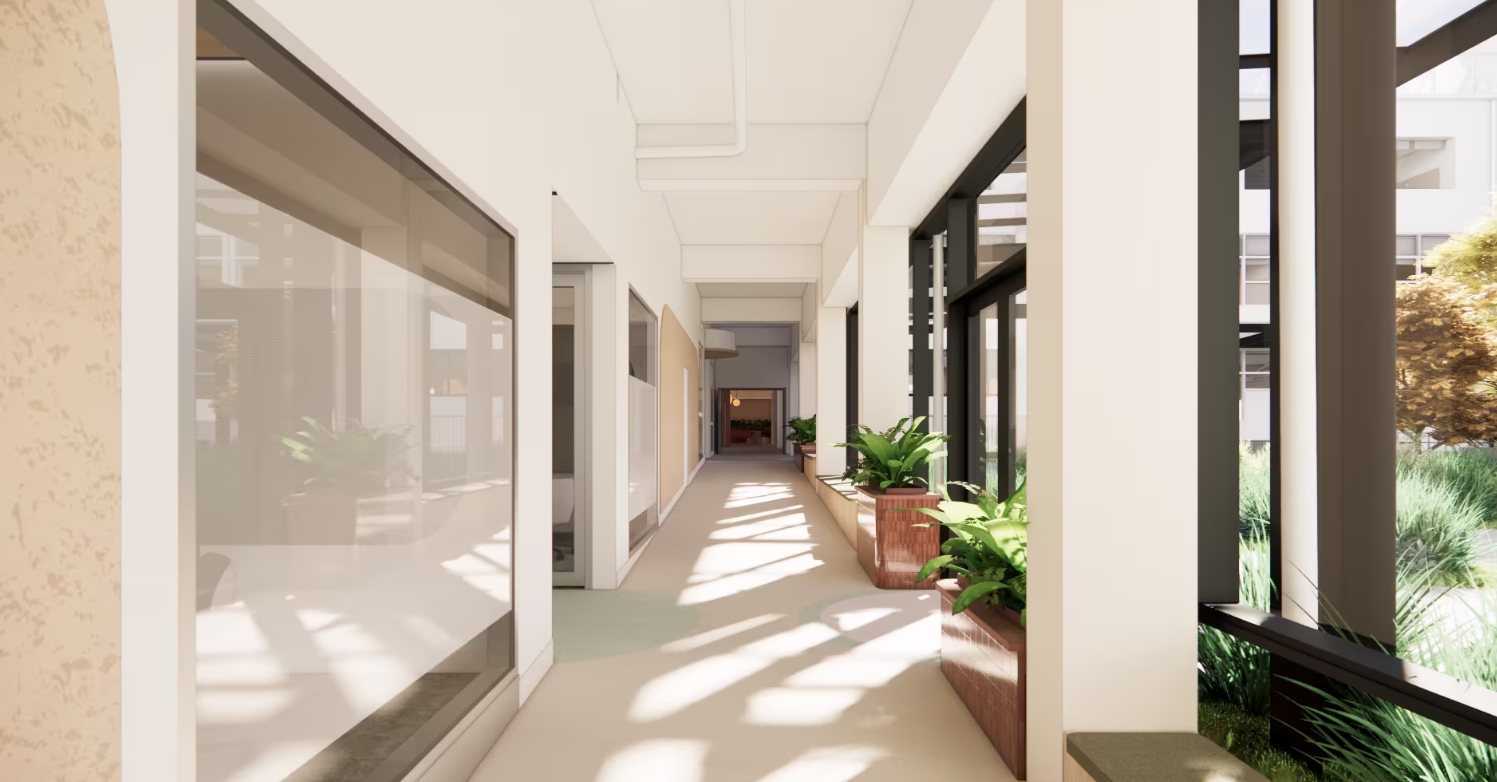 Circulation spaces
Wayfinding and Signage
- Clear, simple, icon-based signage supplemented by text and braille.
- Digital wayfinding through accessible kiosks and QR codes integrated with physical signage.
- Consistent graphic design language to support cognitive accessibility.
- Intuitive wayfinding strategies.
- Landmarks and sensory cues are strategically placed to reinforce orientation.
- Entry kiosks contain an in-built hearing loop for t-coil and Bluetooth devices, QR scanning to transfer wayfinding data, screen reader, ability to receive voice commands, and alternate input devices such as tactile keypad and screen magnifiers. Additionally, any audio shall be supplemented with captions on the display.
Learning and Workspaces
- Classrooms with flexible furniture layouts to allow mobility aid integration.
- Acoustic treatments (sound-absorbing panels, floors, and ceilings) to reduce sensory overwhelm.
- Adjustable lighting: dimmable, glare-controlled, with balanced colour temperatures.
- Breakout and quiet reset spaces adjacent to classrooms for sensory regulation.
- Inclusive AV systems with auracast hearing augmentation and speech-to-text recognition
- Desks and benches are designed for adjustable height options to accommodate diverse body sizes and mobility devices.
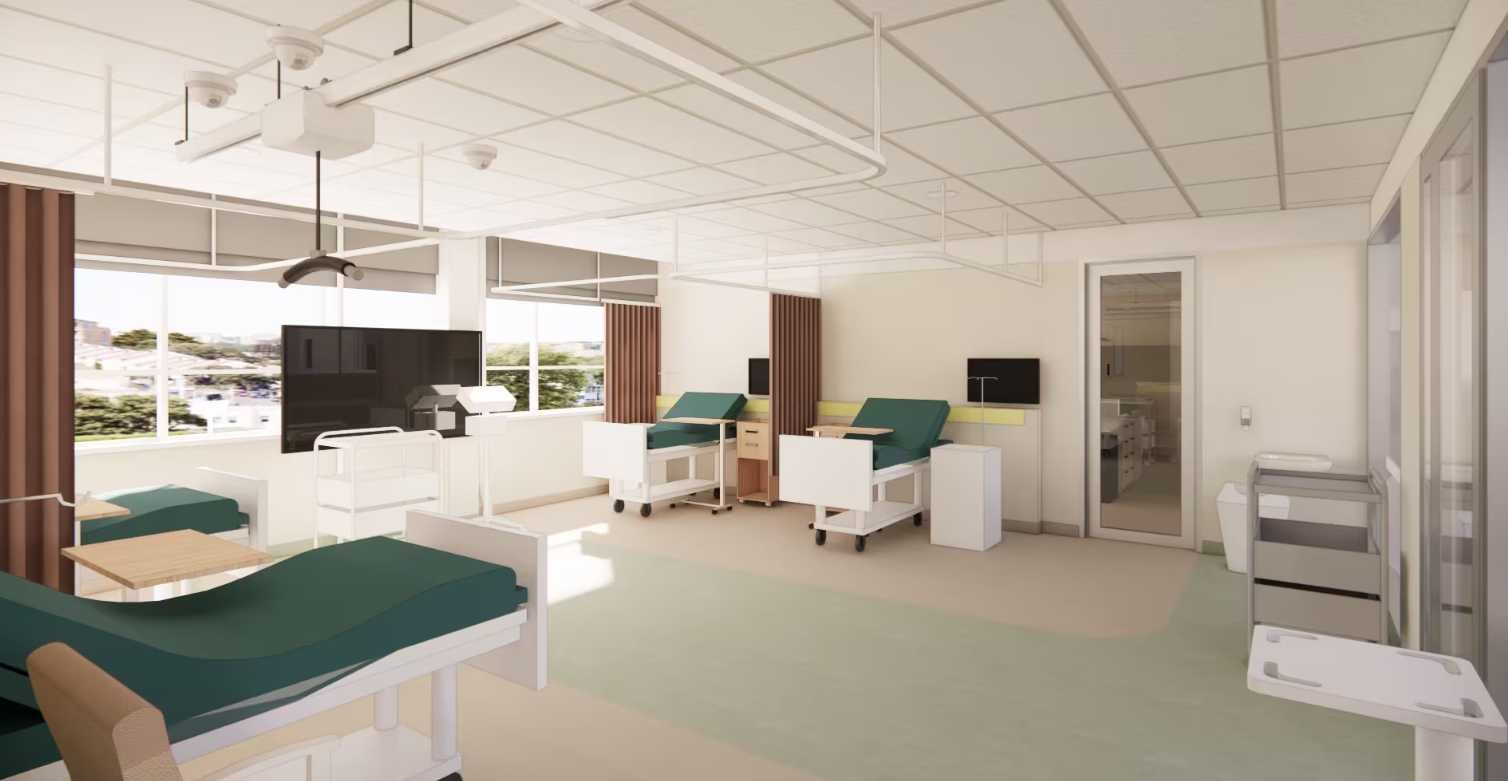 Learning Spaces
Social, Dining and Gathering Spaces
- Cafe and dining zones with clear circulation, flexible seating, and wheelchair-accessible tables.
- Sensory-friendly seating areas with reduced noise and adjustable lighting for neurodiverse comfort.
- Purposeful settings within the courtyards include gathering areas with shaded rest points, quiet nooks and wide pathways.
- Ergonomic seating considerations for diverse postures and preferences (a portion of seating with backrest and armrests).
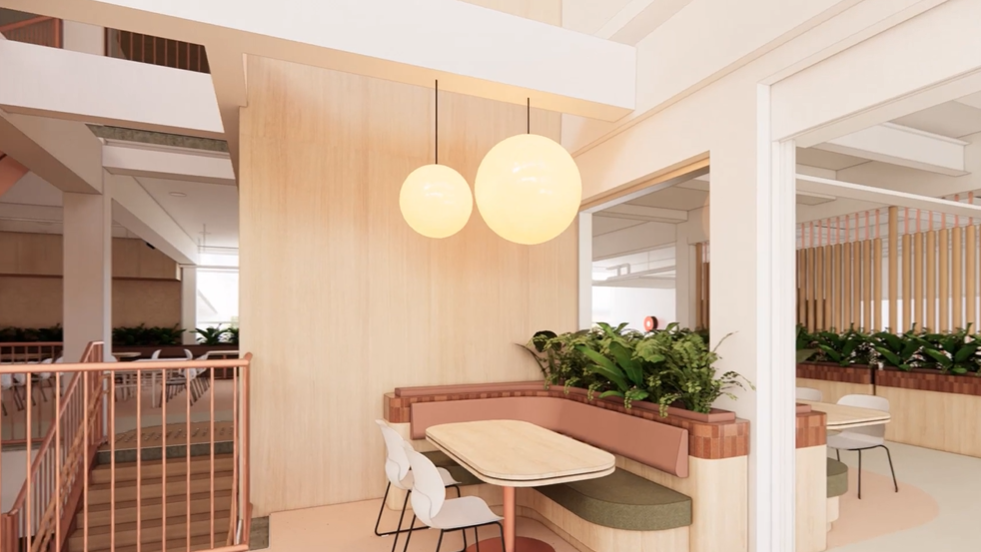 Dining Spaces
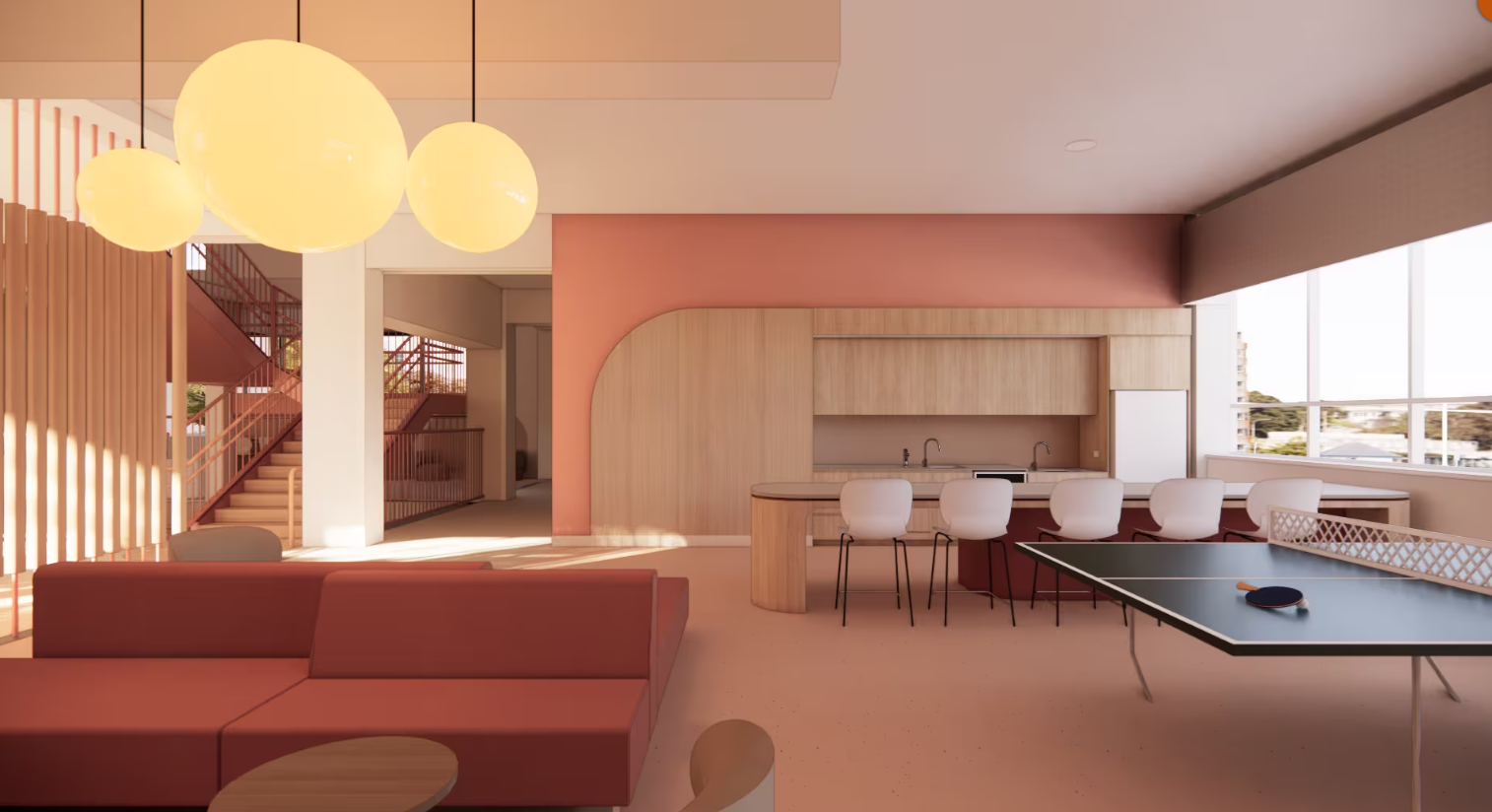 Social Spaces
Toilets and Amenities
- Accessible toilet and shower facilities exceeding compliance.
- Gender-neutral accessible toilets are distributed across the redevelopment.
- Ambulant cubicles with compliant rails and circulation space.
- Animal relief areas are provided for assistance animals.
Sensory Considerations
- Sensory zoning: Layout groups spaces based on sensory input, improving predictability (e.g., separating cafe from quiet focus areas).
- Use of natural and durable materials with low Volatile Organic Compounds (VOCs), minimal glare, and reduced acoustic reflection.
- The colours and materials are warm and welcoming, not clinical.
- Strong integration of biophilic design (natural light, views of greenery, sensory gardens including a Sunken Garden).
- Private nooks and alcoves for privacy and regulation.
- Diffused LED lighting, indirect cove lighting, and ample natural light.
- Selection of a wide variety of seating arrangements for autonomy and comfort.
- Revolving timber battens and textured finishes for tactile and visual interest are placed throughout the redevelopment.
Specialist and Sensory Spaces
- Sensory rooms and reset rooms co-designed with neurodiverse stakeholders.
- Zones for different sensory needs: calming, stimulating, and neutral.
- Full autonomy and control are provided in reset rooms/sensory rooms (lighting, temperature, and sound modulation).
- Additional power outlets for augmentative and alternative communication (AAC) devices, sensory equipment, and personal supports.
- Furniture and finishes chosen for durability, comfort, and sensory appropriateness (low VOCs, non-glare, soft finishes).
- Carefully balanced privacy and transparency in consultation rooms, reset rooms and sensory spaces to preserve dignity and student safety.
Central Courtyard
- The central courtyard serves as a vibrant focal point, offering strong visual connections to the outdoors and multiple vantage points from surrounding areas.
- The space is divided into purposeful settings that engage all seven senses across three interconnected courtyards:
- Visual: Bright, colourful plantings and sculptural elements provide visual interest and stimulation.
- Tactile: Textured plants and pathways with varied surface materials encourage tactile exploration and engagement.
- Movement and Body Awareness: Timber steppers, rocks, and logs promote physical interaction and awareness of body positioning within the space.
- Auditory: Subtle wind chimes and a gentle water feature contribute to a calming acoustic environment that supports sensory regulation.
- Smell: Scented and fragrant planting zones are strategically located to create moments of sensory discovery.
- Taste: Edible herbs and native plants offer opportunities for seasonal produce and sensory engagement within the Western Courtyard.